Course Overview
Welcome to “SQL, NoSQL, Big Data, and Hadoop!” This comprehensive course is designed to provide you with a thorough understanding of various data storage and processing technologies, including SQL, NoSQL, Big Data, and Hadoop. In today’s data-driven world, it’s essential to be familiar with a range of data technologies to handle diverse data types and volumes effectively. In this course, you’ll learn how to work with relational and non-relational databases, manage big data, and utilize Hadoop for distributed data processing.
Main Course Features:
. Comprehensive coverage of SQL fundamentals for relational database management
. Exploration of NoSQL databases such as MongoDB and Cassandra for handling unstructured data
. Introduction to Big Data concepts and technologies, including Hadoop and MapReduce
. Hands-on projects and exercises for practical application of SQL, NoSQL, and Big Data concepts
. Implementation of data processing workflows using Hadoop ecosystem tools like Hive and Pig
. Real-world case studies and examples demonstrating the application of SQL, NoSQL, and Hadoop
. Access to datasets and resources for practicing SQL and Big Data processing
. Supportive online community for collaboration and assistance throughout the course
Who Should Take This Course?
Data engineers and analysts seeking to expand their knowledge of data storage and processing technologies
Software developers interested in understanding how different data technologies work together in modern applications
Business intelligence professionals aiming to leverage Big Data and Hadoop for data analysis and insights
Students and professionals looking to enhance their skills in SQL, NoSQL, and Big Data technologies
Learning Outcomes:
. Master SQL fundamentals for relational database management and querying
. Understand the principles and use cases of NoSQL databases for handling diverse data types
. Gain insights into Big Data concepts and technologies, including Hadoop and MapReduce
. Learn how to manage and process large-scale data using Hadoop ecosystem tools
. Develop practical skills through hands-on projects and exercises in SQL, NoSQL, and Hadoop
. Build a portfolio of projects showcasing proficiency in SQL, NoSQL, and Big Data processing
. Apply data storage and processing techniques to real-world scenarios effectively
. Stay updated with the latest advancements and best practices in SQL, NoSQL, Big Data, and Hadoop technologies.
Course Curriculum Outline
Section 01: Introduction
Section 02: Relational Database Systems
Section 03: Database Classification
Section 04: Key-Value Store
Section 05: Document-Oriented Databases
Section 06: Search Engines
Section 07: Wide Column Store
Section 08: Time Series Databases
Section 09: Graph Databases
Section 10: Hadoop Platform
Section 11: Big Data SQL Engines
Section 12: Distributed Commit Log
Section 13: Summary
Certification
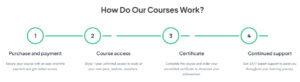
Once you’ve successfully completed your course, you will immediately be sent a digital certificate. Also, you can have your printed certificate delivered by post. All of our courses are fully accredited, providing you with up-to-date skills and knowledge and helping you to become more competent and effective in your chosen field.
Assessment
At the end of the Course, there will be an online assessment, which you will need to pass to complete the course. Answers are marked instantly and automatically, allowing you to know straight away whether you have passed. If you haven’t, there’s no limit on the number of times you can take the final exam. All this is included in the one-time fee you paid for the course itself.
Why choose us?
- Affordable, engaging & high-quality e-learning study materials.
- Tutorial videos/materials from the industry-leading experts.
- Study in a user-friendly, advanced online learning platform.
- Efficient exam systems for the assessment and instant result.
- Internationally recognized accredited qualification.
- Access to course content on mobile, tablet, or desktop from anywhere, anytime.
- The benefit of career advancement opportunities.
 Take Note
Admission/Enrollment
New Students can apply, send enrollment to events@snhseminars.co.za and continue with online payment 100% secure and safe* Once the payment is made, you will receive an email with the login credentials, and you can start learning after logging into the portal.
ENROLLMENT_FORM
TO VIEW FEE & MAKE ONLINE PAYMENT CLICK HERE